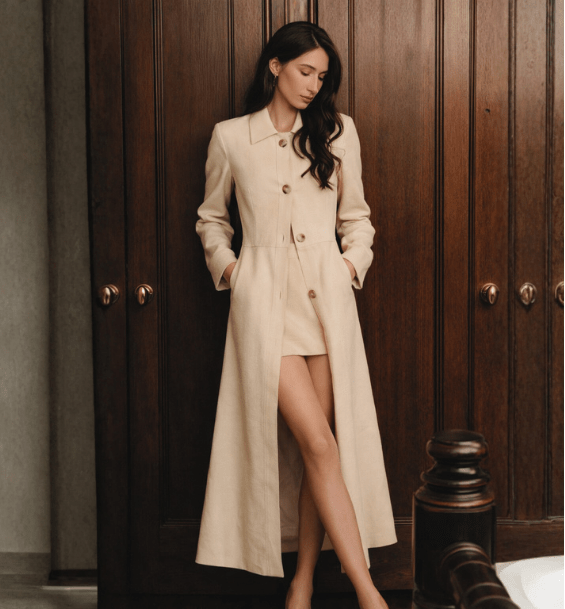
One of the hardest parts of shopping intentionally is figuring out what is actually high quality and what just looks expensive.
Marketing language like premium, luxury, and heritage craftsmanship is everywhere. At the same time, many garments today are made to be replaced quickly, even when the price suggests otherwise.
Learning to recognize quality clothing is one of the most powerful tools for building a wardrobe that lasts.
Higher quality pieces tend to:
- Hold their shape longer
- Wear better over time
- Be easier to repair
- Look better with age
This guide will walk through what actually indicates quality, including fabrics, stitching, construction, and details. We’ll also look specifically at denim and leather, two categories where quality differences are especially meaningful.
Start With the Fabric
Fabric quality is the single biggest factor in how long clothing will last.
A well-constructed garment made with poor fabric will still fail quickly.
Natural fibers tend to age better
While not every natural fiber is automatically sustainable, natural materials tend to wear and age better than many synthetics.
Common durable fibers include:
- Cotton
- Wool
- Linen
- Silk
- Leather
These materials are also easier to repair and, in many cases, biodegradable at end of life.
Synthetic fibers like polyester and acrylic are inexpensive and widely used, but they tend to:
- Pill more quickly
- Trap odors
- Lose structure over time
That said, blends can be useful. A small percentage of elastane (1–2%) in denim, for example, can add comfort without significantly reducing durability.
Fabric weight matters
Heavier fabrics usually last longer.
Examples:
- Denim: 12–16 oz denim tends to be more durable than lightweight fashion denim
- T-shirts: thicker cotton jersey typically resists twisting and stretching
- Sweaters: tightly knit wool will hold its shape longer than loosely knit acrylic blends
Quality fabric should feel substantial but not stiff, with a smooth, consistent weave.
Look at the Stitching
Good construction is one of the clearest signals of quality.
When inspecting clothing, flip it inside out and look at the seams.
Signs of quality stitching
High quality garments usually have:
- Straight, even stitching
- High stitch density (more stitches per inch)
- Clean seam finishes
- No loose threads
Cheap garments often have:
- Widely spaced stitches
- Uneven seam lines
- Fraying edges
- Threads already unraveling
More stitches per inch generally means the seam is stronger and less likely to come apart over time.
Check the Seams
Seams tell you a lot about how a garment was constructed.
Higher quality clothing often uses stronger seam types, such as:
- French seams
- Flat-felled seams
- Bound seams
These techniques prevent fraying and create stronger connections between fabric pieces.
Fast fashion garments often use simple overlocked seams, which are faster and cheaper but not always as durable.
Examine the Details
Small details often reveal the difference between a well-made garment and a cheaply produced one.
Look for:
Pattern alignment
On quality garments, patterns and stripes usually line up across seams.
Misaligned patterns are a common shortcut in mass production.
Buttons and hardware
Higher quality pieces often use:
- Metal buttons
- Real horn or shell buttons
- Reinforced buttonholes
Plastic buttons can be fine, but extremely lightweight or hollow buttons tend to break quickly.
Hems
Quality garments typically have wide hems, which:
- Add structure
- Allow for future alterations
- Reduce fraying
Very narrow hems are often a cost-cutting measure.
How to Evaluate Denim Quality
Denim is one of the easiest categories to evaluate because quality differences are visible.
Historically, denim was designed as workwear, so durability was the primary goal.
Check the fabric weight
Quality denim often falls between 12 and 16 ounces per yard.
Lightweight denim (under 10 oz) is typically used for fashion pieces rather than long-lasting jeans.
Heavier denim:
- Wears longer
- Fades more beautifully over time
- Holds its structure better
Look for selvedge denim
Selvedge denim is woven on traditional shuttle looms, producing a clean finished edge.
You can identify it by rolling the cuff and looking for a tight finished edge, often with a colored line.
Selvedge denim is not automatically better, but it often indicates:
- Smaller production runs
- Higher quality fabric
- More traditional manufacturing methods
Inspect the stitching and reinforcement
High quality denim often includes:
- Flat felled seams
- Bar tacks at stress points
- Rivets at pocket corners
These reinforcements prevent tearing where jeans typically fail.
Look at the pocket bags
A surprising detail: cheap jeans often use very thin pocket fabric, which tears quickly.
Higher quality brands usually use thicker cotton pocket bags.
How to Evaluate Leather Goods
Leather quality varies dramatically, and marketing terms can be confusing.
The biggest indicator of quality is the type of leather used.
Full grain leather
This is the highest quality leather.
Full grain leather:
- Uses the outermost layer of the hide
- Retains natural grain and imperfections
- Develops a patina over time
Because it is minimally processed, it tends to age beautifully and last decades.
Top grain leather
Top grain leather is slightly sanded and finished to create a uniform appearance.
It is still durable but does not develop the same character over time as full grain leather.
Genuine leather
Despite the name, genuine leather is actually a lower grade.
It is made from leftover layers of the hide and often coated with synthetic finishes.
These products tend to crack or peel with time.
Bonded leather
Bonded leather is essentially leather scraps mixed with adhesives.
It is the least durable option and commonly used in inexpensive goods.
Signs of quality leather
Look for:
- Natural grain variation
- Substantial thickness
- A soft but structured feel
- Minimal plastic coating
Quality leather should feel alive and slightly imperfect, not overly smooth or plasticky.
Pay Attention to Fit and Structure
A garment that fits well will naturally last longer in your wardrobe.
Poorly fitting clothing tends to be:
- Worn less often
- Stretched in the wrong places
- Replaced quickly
Quality clothing also tends to have better structure, meaning it holds its intended shape without sagging.
Price Is Not Always a Reliable Indicator
Price and quality are not always aligned.
Many expensive brands still produce clothing using:
- Synthetic fabrics
- Cheap construction
- Trend-driven designs
On the other hand, some smaller brands prioritize craftsmanship and materials while keeping prices relatively reasonable.
Learning to identify fabric quality and construction is far more useful than relying on brand reputation alone.
The Goal Is Clothing That Gets Better With Time
The best clothing tends to improve with age.
Denim softens and fades.
Leather develops patina.
Natural fibers become more comfortable with wear.
These pieces become part of your life rather than something disposable.
When you learn to recognize quality, shopping becomes slower, more intentional, and ultimately more satisfying.


 The Deep End
Leave a comment